Small Appliance Continuity & Cord Repair
Mains electricity demands rigorous respect. Yet over 70% of discarded countertop appliances—toasters, vacuum cleaners, desk lamps, and kettles—fail exclusively due to fractured copper strands inside the flexible power cord.
Zero-Energy Safety Verification
Before applying a screwdriver or touching copper conductors, you must guarantee zero energy state. For plug-in countertop appliances, this is verified by physical air-gap disconnection (unplugging the unit and positioning the plug in plain sight on the workbench). For fixed household branch circuits, turn off the circuit breaker and use a certified non-contact AC voltage tester, followed by a calibrated multimeter check between Live, Neutral, and Ground.
“Never diagnose an energized appliance chassis. All diagnostic triage regarding copper strand continuity, thermal fuses, and microswitch springs must be performed with the device unpowered on the bench.”
— Workshop Safety Manual, Pickle Parade PopixThe Three Primary Points of Failure
-
Molded Cord Strain Relief Fatigue
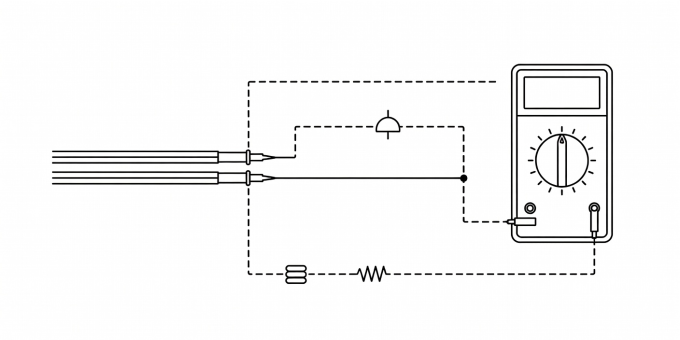
Where the cord enters the appliance housing or exits the wall plug, repeated acute bending fatigues the inner multi-strand copper wires. The outer PVC jacket may appear intact, but the copper strands inside have snapped. Set your digital multimeter to the audible continuity buzzer. Place one probe on the plug pin and the other on the internal terminal screw; wiggle the cord vigorously. If the buzzer drops out intermittently, cut away 100mm of fatigued cord and reterminate.
-
One-Shot Thermal Cutoff Fuses
Electric kettles, sandwich presses, and space heaters contain an inline metallic thermal fuse encased in a fiberglass sleeve. If air vents become clogged with dust, the fuse permanently opens its internal spring solder pellet at a specified temperature (e.g., 142°C). Testing with a multimeter reveals infinite resistance (open circuit). Replacing this inexpensive $1.50 OEM fuse restores full operation safely.
-
Rocker Switch Oxide Buildup
Every time a high-current load is switched, a tiny electrical micro-arc oxidizes the copper-silver contact pads inside the rocker switch. Over years, this carbon patina creates high contact resistance, causing the switch to feel warm or fail to complete the circuit. Spraying residue-free electrical contact cleaner into the switch mechanism cleans away soot and restores continuity.
Standard 3-Core Rewiring Color Codes
When reterminating a flexible power cord with a new plug, strictly adhere to international wiring color standards:
| Conductor Function | Modern IEC Standard | Legacy UK / US Standard | Proper Mechanical Termination |
|---|---|---|---|
| Earth / Protective Ground (PE) | Green with Yellow Stripe | Green (US) / Solid Green (UK) | Leave the earth conductor longest inside plug body so it detaches last under strain. |
| Neutral Return (N) | Blue | White (US) / Black (UK) | Twist wire strands cleanly; never solder if clamping under screw head. |
| Live / Phase Line (L) | Brown | Black (US) / Red (UK) | Connect directly to fused brass terminal pin in fused plugs. |